Your core has an amazing ability to improve at any age, even beyond 55, and it plays a powerful role in maintaining strength, balance, and daily confidence. With the right strategy, you can strengthen your midsection, support better posture, and move more freely in everyday life. The secret lies in choosing simple exercises that activate your abs effectively while remaining comfortable enough to repeat regularly. Over time, short and focused routines like this can help rebuild a strong and reliable core.
Why Bed-Based Core Training Works So Well
One of the smartest ways to begin is by using supported positions that reduce unnecessary strain and allow your core muscles to do the real work. Training on a bed provides a stable and comfortable surface where you can focus on control, breathing, and proper movement. Many people notice early activation in their midsection with this approach, which often increases motivation and consistency. When exercises feel manageable and effective, sticking to the routine becomes much easier.
The Complete 7-Minute Core Routine
This routine includes four simple yet powerful exercises that target your entire core while staying gentle on your joints. It helps improve strength, coordination, and deep muscle engagement that supports your spine.

What you need: A firm bed and 7 uninterrupted minutes.

Routine structure:
Dead Bugs – 30 seconds
Reverse Crunches – 30 seconds
Russian Twists – 30 seconds
Supine Knee Tucks – 30 seconds
Dead Bugs for Deep Core Stability
Dead bugs are excellent for activating deep core muscles while coordinating arm and leg movement. This exercise helps stabilize your spine and trains your core to resist unnecessary motion. Many people quickly feel their lower abs engage when performed correctly. Over time, it improves posture and overall movement control.
How to do it:
Lie on your back with arms extended upward
Lift knees to form a 90-degree angle
Press your lower back gently into the bed
Lower opposite arm and leg slowly
Return to start with control
Alternate sides continuously
Reverse Crunches for Lower Ab Strength
Reverse crunches target the lower abdominal area, which often weakens with age. This movement focuses on controlled pelvic motion and strengthens the front core without putting strain on the neck. It is highly effective for tightening and activating the lower midsection.
How to do it:
Lie on your back with knees bent and lifted
Keep arms by your sides
Engage your core and tilt your pelvis upward
Lift hips slightly off the bed
Lower slowly with control
Repeat steadily

Russian Twists for Oblique Activation
Russian twists work your obliques, helping improve rotational strength and stability. Strong obliques support better balance and smoother daily movements. This exercise adds depth to your core routine by targeting side muscles.
How to do it:
Sit with knees bent and feet on the bed
Lean back slightly while keeping chest lifted
Clasp your hands together
Rotate your torso to one side
Then rotate to the other side
Continue alternating smoothly
Supine Knee Tucks for Full Core Engagement
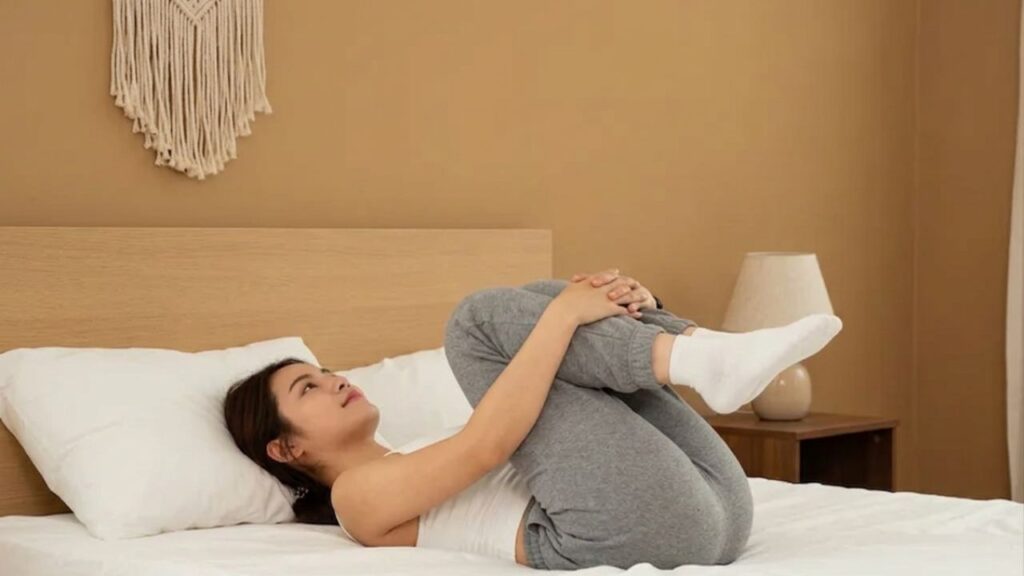
Supine knee tucks challenge your entire abdominal region while improving coordination between your hips and core. This movement delivers strong results in a short time and helps build endurance and control.
How to do it:
Lie flat with legs extended
Keep hands by your sides
Pull both knees toward your chest
Pause briefly at the top
Extend legs back slowly
Repeat with control
Daily Habits to Boost Core Strength Faster
Core strength improves best when short workouts are combined with simple daily habits. Consistency matters more than intensity, especially for long-term results. Small efforts done regularly can lead to noticeable improvements in strength and posture.
Helpful habits:
Train your core most days of the week
Stay mindful of posture during daily activities
Include enough protein in your diet
Engage your core lightly during movement
Increase workout duration gradually
Stick to short, consistent routines

By following this routine and maintaining these habits, many people over 55 begin to feel stronger, more stable, and more confident in their daily movements.