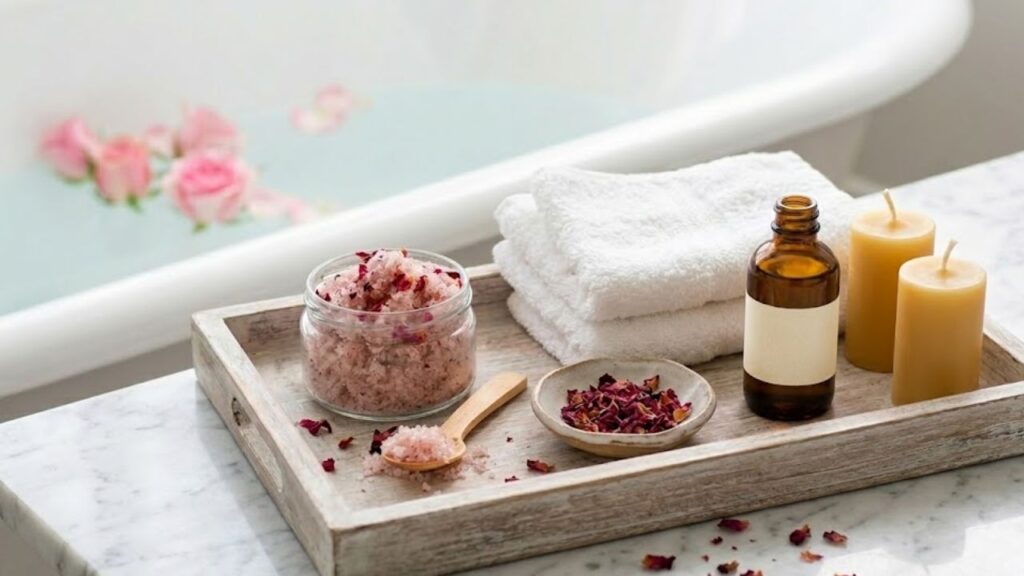
You don’t need to completely renovate your bathroom to make it your personal haven. The key to creating a spa bath at home is to combine high-quality products, the ideal atmosphere, and a little preparation. It’s not as hard as you might think to turn your ordinary bath into a luxurious retreat whether you’re struggling with the Monday blues or just want to give yourself some well-earned alone time. Let’s explore how you can transform your bathroom into the peaceful retreat you’ve been longing for, from easy lighting tips to do-it-yourself spa bath recipes.
Crucial Components of a Spa Bath Experience at Home
The secret to making a spa bath is to do the fundamentals correctly. Creating an experience that makes you feel pampered and at ease is more important than having the most opulent bathroom consider it the beginning of your own personal wellness retreat.
Creating the Ideal Scene for Bath Relaxation
The entire atmosphere of your at-home spa experience is created by the lighting since harsh overhead lights are detrimental to relaxation, start by turning them down or off entirely. Here, candles are your best friend. Arrange them safely around the tub, making sure they are on sturdy surfaces away from curtains or towels.

Additionally, sound is a major factor in bath relaxation. Make a playlist with relaxing music sounds from the outdoors, or even songs for guided meditation reduce the volume so that it doesn’t feel like a distraction but rather background ambience now is the time to disconnect; your phone should be in silent mode.

Essential High-End Bath Products for Your At-Home Spa
Your spa experience can be made or broken by using high-quality bath products. Bath salts are a must-have because they soften your skin and relieve tense muscles. While Dead Sea salts provide a luxurious spa experience with additional minerals, Epsom salts are excellent for relieving muscle aches.
Bath blends with essential oils elevate your soak. Rose creates a mood-boosting atmosphere lavender encourages relaxation, and eucalyptus energizes. Essential oils should always be diluted appropriately; a few drops combined with bath salts or a carrier oil will work. Choose bath bombs with natural ingredients to prevent skin irritation, but they do add a fun fizzing element.
Natural Bath Soaks and DIY Spa Bath Recipes
In addition to being economical making your own bath blends allows you to personalize the benefits and fragrances to fit your mood additionally there are no harsh chemicals or unknown ingredients in your bath, so you know exactly what’s in it.
Stress-Relieving Aromatherapy Bath Blends
Combine two cups of Epsom salts with three drops of chamomile oil and five drops of lavender essential oil for the ultimate stress-relieving soak. After a long day, this combination is great for relaxing. Try mixing sea salt with eucalyptus and peppermint oils if you’re feeling lethargic and need a boost of energy.
Rose and geranium are a lovely combination when you need a mood boost for an Instagram-worthy bath moment, combine these with some dried rose petals. Always start with fewer drops and add more if necessary because essential oils are powerful.
Combinations of Homemade Bath Salt
It’s surprisingly easy to make your own bath salt blends. For muscle relief start with a base of Epsom salts, then add your preferred essential oils and thoroughly blend. Add a few drops of tea tree oil to Himalayan pink salt to create a detoxifying mixture.
A beautiful touch can be added with dried flowers and herbs, but make sure they are properly dried to prevent messing up your tub. Chamomile flowers, rose petals, and lavender buds all work wonderfully. To maintain the potency of your homemade blends, store them in airtight containers.
Components of a Luxurious Bathroom Retreat’s Design
To create a spa-like atmosphere your bathroom doesn’t have to be completely renovated. Little adjustments can have a big impact on how your room feels and works when you’re relaxing.
Lighting Options for a Spa-Like Setting
Installing dimmer switches for your main bathroom lights is something you should think about if you’re serious about doing regular at-home spa treatments. You have total control over the atmosphere as a result. LED candles that run on batteries are a safer option than real flames, particularly if you have small children or pets.
Baths in natural light during the day can be breathtaking open your curtains or blinds to let in gentle daylight if privacy permits. The ideal spa ambiance is produced by combining natural light with a few thoughtfully positioned candles.
Visual and Textural Improvements
The secret to creating that tranquil spa atmosphere is decluttering keep only your spa essentials visible and store everyday toiletries out of sight. A few carefully selected plants, such as eucalyptus or snake plants, can add a natural spa element and purify the air.
A cozy bath pillow and soft fluffy towels can greatly improve your experience. Instead of using vivid stimulating hues, opt for soothing neutral hues that encourage relaxation.
Developing a Spa Bath Ritual: A Comprehensive Guide
Your spa bath feels more deliberate and opulent when you follow a set routine. It involves establishing a routine that lets your body and mind know when it’s time to unwind.
Checklist for Preparing for a Bath
Nothing detracts from the spa atmosphere like a dirty tub or cluttered surfaces so start by giving your bathroom a quick clean before you run the water gather all of the products you have selected. This includes candles, towels, essential oils bath salts, and a glass of water to stay hydrated.

Warm enough water to help your muscles relax, but not hot enough to make you a lobster, should be added to your tub. To ensure that your bath products dissolve and disperse evenly, add them while the water is running.
While Taking a Spa Bath
It is best to soak for 15 to 20 minutes. If you wait any longer, you run the risk of dehydrating your skin or experiencing heat-related vertigo deep breathing exercises, meditation, or just letting your thoughts wander can all be done during this time.
Apply any face mask or hair treatment you’re using before getting in the tub so it can continue to work while you’re soaking. It’s crucial to stay hydrated especially in warm water, so keep that glass of water close at hand.
Recuperation and Post-Bath Care
Take your time getting out of the tub to prevent vertigo. Instead of rubbing, gently pat dry your skin. Then, while your skin is still slightly moist, apply a nourishing body moisturizer to seal in moisture.
Wrap yourself in cozy clothing or a soft robe to continue the relaxation. Let the tranquility linger now is not the time to check your phone or start doing housework.
Ideas for Low-Cost Home Spa Baths
It’s not necessary to spend a fortune to create a luxurious spa experience. You can feel pampered without having to pay a high price if you are creative and shop wisely.
DIY Projects Under ₹500
Simple pharmacy Epsom salts are just as effective as high-end spa varieties. For a fraction of the price, you can have a luxurious bath soak by adding a few drops of essential oil. Adding baking soda to any bath is a great way to soften skin.
Reuse things you already own: tea light holders can produce lovely ambient lighting, and mason jars are ideal for storing homemade bath salts. Your phone’s basic playlist has the power to drastically change the mood.
Mid-Range Priorities for Investments
Invest in a quality starter set of essential oils if you are prepared to spend a little more. High-quality oils have greater therapeutic benefits and last longer. If you intend to regularly take spa baths, investing in a cozy bath pillow and some luxurious towels is also worthwhile.
In order to find high-quality bath and body products without having to commit to full-size purchases websites like Smytten are helpful. You can try a variety of bath products through carefully chosen trial packs from over 1,500 reputable brands, such as Love, Beauty & Planet, and Bella Vita, before determining which is best for your at-home spa regimen.
FAQ:
How frequently should I have a spa bath at home?
For most people, once or twice a week is ideal. Your skin may become dry from taking hot baths every day, so pay attention to your body and make the necessary adjustments.
What is the perfect water temperature for a soothing bath?
Try to get between 37 and 39°C (98 and 102°F). Instead of being extremely hot the water should feel cozy.
Is it possible to have a spa bath in a tiny bathroom?
Of course! Pay attention to decluttering lighting and fragrances. With the correct atmosphere even the smallest bathroom can feel opulent.
Do bubble baths work well to create a spa-like atmosphere?
Bubble baths can be beautiful but make sure the formulas are mild and natural. Bath salts may be a better choice for sensitive skin because some people find them to be drying.
How can I keep my tub from getting stained by bath bombs?
After your bath, quickly rinse your tub and select bath bombs with natural coloring the majority of high-quality bath bombs don’t leave long-lasting stains.

Which essential oils are ideal for novices?
Start with tea tree for its purifying qualities, peppermint for energy, and lavender for relaxation these are generally well-tolerated and adaptable.