
Many people feel confused when it comes to understanding the difference between sit-ups and crunches. Both exercises are designed to strengthen the core, but the way they activate muscles and the movement involved can vary quite a bit.
According to certified trainer Katharine Glazer, the key difference lies in the movement of the lower back. During a crunch, your lower back stays pressed against the floor while only your head and shoulders lift. This makes crunches a more focused exercise that mainly works the rectus abdominis, particularly the upper abdominal muscles.
Sit-ups, however, involve lifting your entire torso off the floor. Because of the larger range of motion, sit-ups recruit several muscle groups at the same time. These include the rectus abdominis, hip flexors, transverse abdominis (deep core muscles), obliques, and even muscles in the lower back.
 Goodbye Hair Dyes: Viral grey hair trend celebrates natural beauty while softening ageing appearance
Sit-Ups vs. Crunches: Which One Is Better?
The answer depends largely on what muscles you want to focus on. Every person has different training needs and goals, so one movement isn’t automatically better for everyone.
If you want an exercise that activates several muscle groups at once and gives you more overall core engagement, sit-ups can be a strong choice. Because the torso lifts completely off the ground, the body works harder to stabilize and coordinate multiple muscles.
On the other hand, if your goal is to isolate the abdominal muscles and keep the movement simple, crunches may be the better option. They focus more directly on the abs and are easier for beginners to perform with correct form.
It’s also worth noting that some fitness professionals prefer alternative core exercises altogether, depending on a person’s fitness level and injury history.
Benefits of Sit-Ups
Sit-ups activate multiple muscles throughout the body. When performed correctly, they work the abs along with the hips, legs, and lower back, giving you a broader core workout.
They also help improve body stability. Lifting the entire torso requires the core to stay engaged, which strengthens the muscles responsible for balance and coordination.
Another advantage is posture improvement. By strengthening stabilizing muscles in the core and back, sit-ups can help support a more upright sitting and standing position.
Sit-ups may also enhance flexibility. The repeated motion of lifting and lowering the torso can help loosen the spine and hip joints, which may support better movement and athletic performance.
How to Perform a Proper Sit-Up
Start by lying on your back with your knees bent at about a 90-degree angle and your feet flat on the floor. Place your fingertips lightly behind your ears with elbows pointing outward.
Take a deep breath in. As you exhale, tighten your core muscles and slowly lift your torso upward. Continue lifting until your chest moves toward your thighs.
Then inhale as you slowly lower your body back to the floor with control. That completes one repetition. Beginners can start with about ten repetitions and gradually increase as strength improves.
Some trainers recommend anchoring your feet under a sturdy object or having a partner hold them down to help maintain proper form during the movement.
Sit-Up Variations You Can Try
Boxer Sit-Up
Begin lying on your back with knees bent and feet flat on the floor. Keep your hands in fists near your chest. Lift your torso into a sit-up, then extend one arm forward in a punching motion. Alternate arms before lowering back down.
Sprinter Sit-Up
Lie on your back with legs straight and arms by your sides. Quickly sit up while bringing one knee toward your chest and swinging the opposite arm forward. Return to the floor and repeat on the other side.
Slam Ball Sit-Up
Lie on your back with knees bent and feet on the floor while holding a slam ball above your chest. Engage your core and lift your torso into a seated position while keeping the ball overhead. Slowly return to the starting position.
Benefits of Crunches
Crunches are particularly effective for strengthening the upper abdominal muscles. Because they isolate the rectus abdominis, they are often used for high-repetition abdominal workouts.
They are also relatively easy to learn. The movement is smaller and simpler than a sit-up, making it easier for beginners to focus on proper form without placing strain on multiple muscle groups.
Another benefit is the lower risk of injury. Since crunches involve a smaller range of motion, they typically place less pressure on the lower back and spine compared to sit-ups.
How to Perform Crunches Correctly
Lie on your back with knees bent and feet flat on the floor. Place your fingertips lightly behind your ears while keeping your elbows open to the sides.
Take a breath in, then tighten your abdominal muscles. As you exhale, lift only your head and shoulder blades off the floor while keeping the lower back pressed down.
Keep your chin slightly tucked but not pressed to your chest. Slowly lower back down as you inhale. One lift and return counts as a single repetition.
Start with around ten repetitions and gradually increase to twenty or thirty as your core strength improves.
Crunch Variations to Add to Your Workout
Bicycle Crunch
Lie on your back with knees bent. Bring one elbow toward the opposite knee while extending the other leg outward. Alternate sides in a cycling motion.
Reverse Crunch
Begin lying on your back with legs lifted and knees bent. Use your abdominal muscles to curl your knees toward your chest, lifting your hips slightly off the floor before lowering back down.
Frog Crunch
Lie on your back with arms at your sides. Bring your heels together and knees apart in a tabletop position. Extend your legs outward diagonally, then bend the knees again to return to the starting position.
How Other Core Exercises Compare
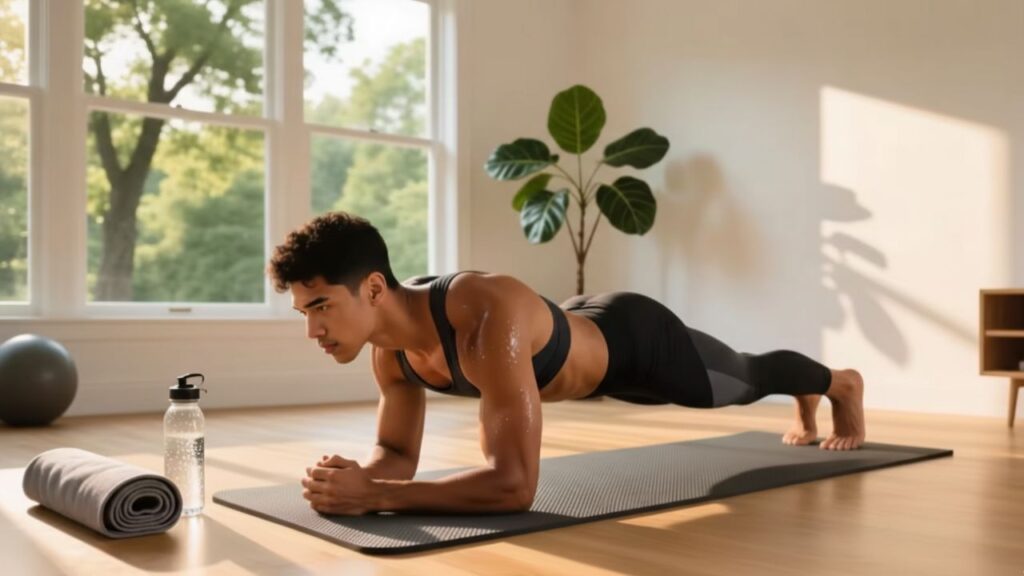
Although crunches and sit-ups can be effective, many trainers also recommend other core exercises like planks. Planks engage not only the abdominal muscles but also the glutes, shoulders, hip flexors, and back muscles, creating a more complete core workout.
Another advantage of planks is that they place less strain on the neck compared with repeated crunch or sit-up movements.
Rotational core exercises can also be useful additions to a training routine. Movements such as Russian twists, wood chops, and reverse bicycle exercises help strengthen the obliques and improve spinal mobility.
So, Which Exercise Should You Choose?
Both crunches and sit-ups can strengthen the abdominal muscles, but each comes with advantages and potential drawbacks.
Sit-ups provide broader muscle engagement but may place more stress on the lower back if performed incorrectly. Because of this risk, some trainers advise limiting or avoiding them.
Crunches, meanwhile, tend to be safer for many people because they involve less spinal movement. However, they mainly focus on the upper abdominal muscles and do not engage the lower abs or obliques as much.

The best approach is often to include a variety of core exercises in your routine, choosing movements that match your fitness level, goals, and comfort.